
BASE and Telenet are not two networks competing with each other. They are two brands on the same masts. BASE has belonged to the Telenet group since 2016, and its customers use Telenet's mobile network — the same coverage, the same 5G, the same speeds. What changes from one label to the other is the bill.
It is the underlying reflex of the whole Belgian market: three networks, fifteen labels. Choosing between BASE and Telenet is therefore not choosing a signal. It is deciding how much you want to pay for a signal that is already settled. And the gap, at equal service, runs into tens of euros a year.
Are BASE and Telenet really the same 5G network?
Yes, bit for bit. BASE is a brand of the Telenet group and runs no masts of its own: it routes its customers onto Telenet's mobile network. A BASE plan and a Telenet plan therefore receive exactly the same 5G, with the same coverage and the same speeds.
That extends to the on-board technology. Every BASE plan — BASE 15, 20, 29 and 39 — includes 4G, 5G and eSIM, with no surcharge and no hidden tier. 5G is not reserved for the expensive plans: it is active from the entry level, on the same frequencies as Telenet.
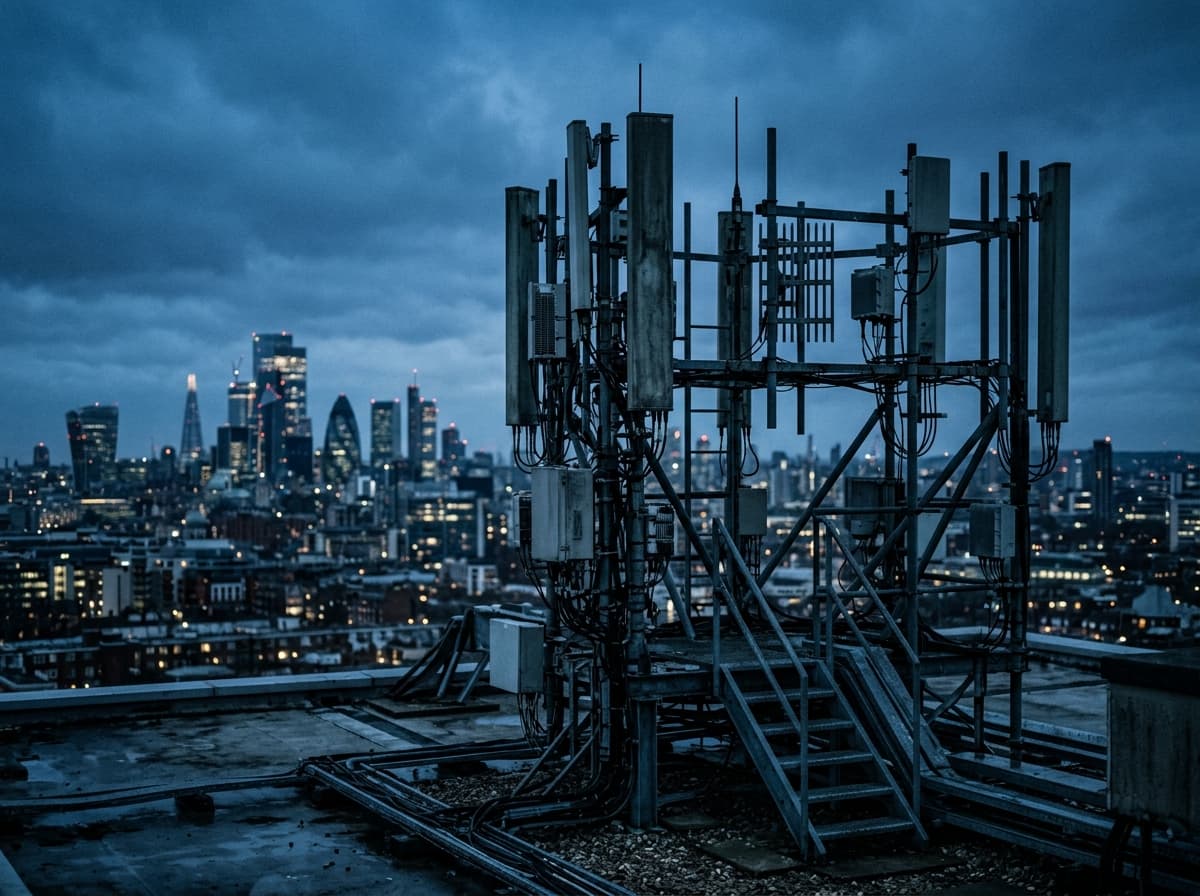
What is the price gap between BASE and Telenet at equal data?
Six euros a month on the entry level, and the gap widens as you climb. At 15 GB, BASE 15 is listed at €15/month standard, while Telenet Basic 15 GB costs €21/month. Same network, same volume, same 5G: €6 difference every month, €72 over the year, for a signal nothing sets apart.
The table below lines up the standard prices — the month-thirteen ones, not the headline rates — on the Telenet network.
| Plan | Data | Standard price /month | Network |
|---|---|---|---|
| BASE 15 | 15 GB | €15 | Telenet |
| Telenet Basic | 15 GB | €21 | Telenet |
| BASE 39 | 300 GB | €39 | Telenet |
| Telenet Kong | unlimited (up to 300 GB) | €50 | Telenet |
| TADAAM | unlimited (up to 300 GB) | €25 | Telenet |
The reading is clear: at comparable data, the Telenet brand consistently costs more than BASE, which is itself undercut by TADAAM on unlimited. Three prices, one network.
What is the Telenet network's 5G coverage worth?
It has climbed to the top of the country. According to the BIPT survey of January 2026, the Telenet network covers almost the entire population outdoors and around 85 % of the territory, reaching 67 % of households indoors — the best indoor figure behind Proximus.
On speed, Telenet measures 90.7 Mbps download. That sits below Proximus's 136.8 Mbps, but ahead on the way up: 30.2 Mbps upload, the best of the three Belgian networks. For posting a video or holding a video call on the move, upload is what counts, and Telenet leads there.
These figures apply to BASE as much as to Telenet, since it is the same network. A BASE customer at €15/month therefore receives the 5G that puts Telenet at the top of Belgian coverage — without paying the Telenet-brand price.
BASE or Telenet: which to choose at the top end?
BASE, if the only criterion is the price of data. For the big bundle, BASE 39 offers 300 GB at €39/month, while Telenet's Kong plan — its in-house unlimited — is €50/month. Eleven euros a month, €132 a year, for a strictly identical network.
And there is cheaper still on those same masts. TADAAM, another Telenet-network brand, brings unlimited (up to 300 GB) down to €25/month. On the sole ground of price per gigabyte, Telenet's own-brand unlimited is therefore the most expensive option on its own network.
Why pay more with Telenet than with BASE?
Because the euros of difference do not pay for the network — they pay for everything around it. The signal being identical, the price gap covers Telenet One Number, integration into a Telenet internet + TV bundle, the app, the shop network and branded customer service.
For a household already subscribed to Telenet's fixed internet and television, folding mobile into the same bill has a simplicity logic, sometimes with a bundle discount. For anyone who just wants 5G at the best price, that logic disappears: BASE gives the same network without the brand premium.

Do BASE promotions change the picture?
They ease the first few months' bill, not the decision. BASE runs regular promotions: a 30 % discount runs from 20 July to 28 September 2026 on the €15, €20, €29 and €39 plans. Tempting, but temporary — once the period is over, you return to the standard price.
The only price that matters when comparing two plans is the month-thirteen one. A headline rate at −30 % says nothing about what you will pay in the second year. That is why the table above keeps the standard prices: they survive the promotion, and it is on them that the BASE / Telenet gap is judged.
So, BASE or Telenet?
BASE, in almost every case where price guides the choice — the network being, by construction, the same. Telenet's own brand only holds up if you value the service, the app and the integration of an existing bundle; otherwise, you are paying for a label, not a signal.
That leaves comparing these prices with the rest of the market. The Telenet network is only one of the country's three, and an equivalent plan may cost less elsewhere, on another network. Our 5G plans ranking lines up the eight offers that hold on the month-thirteen price, with the host network beside each rate. And to weigh them criterion by criterion, the comparison table puts all eight side by side.
Sources: BIPT (mobile coverage and speeds in Belgium, January 2026 survey); BASE and Telenet price lists (July 2026); CallMePower and Selectra surveys (July 2026); Test Achats; Astel. Standard prices excluding promotions; we compare price lists and public measurements, with no field testing.
Opérateurs 5G comparator
Compare all opérateurs 5g side by side.
Compare now →
Frequently asked questions
Bastien a passé sept ans dans le déploiement de sites mobiles en Wallonie et à Bruxelles avant de basculer côté rédaction, en 2021. Il connaît la différence entre une antenne 5G qui apparaît sur une carte marketing et une antenne qui porte réellement à travers un mur de brique. Depuis, il relève chaque mois les grilles tarifaires de Proximus, Orange, Telenet, BASE, DIGI, Mobile Vikings, Mega, hey! ou yoin, recoupe les débits avec les mesures de l'IBPT, et recalcule le prix sur 24 mois quand un opérateur affiche un tarif à 1 € la première année. Son constat : en Belgique, la 5G n'appartient qu'à trois réseaux, et la quasi-totalité de l'écart de prix entre deux abonnements identiques vient de la marque posée dessus, pas du signal. Il y a un truc qui le gêne dans les comparatifs qui classent Proximus premier sans jamais écrire qu'un forfait équivalent coûte trois fois moins ailleurs sur le même réseau.