
DIGI is the only name on the Belgian market that does not rent someone else's 5G: it builds its own. It is the country's fourth mobile network, after Proximus, Orange and Telenet, and that is what makes it both interesting and incomplete. Interesting, because its prices have no equal — 60 GB at €9 a month when Proximus asks €24.99 for the same volume. Incomplete, because its masts still cover only part of the territory, and the rest runs on a competitor's network.
So the question is not "is DIGI cheaper?" — the answer is yes, no argument. The real question is: what do you actually receive when you pay €9 instead of €25? That is where the network matters more than the label.
Is DIGI worth it in Belgium in 2026?
In town, yes, with little hesitation. Elsewhere, it depends on what your address receives. DIGI lines up the best data-to-price ratio on the Belgian market and has frozen its rates for the whole of 2026 — but its own network is still under construction, and coverage remains the only real criterion to check before signing.
DIGI's bet is simple: break prices to take market share while it rolls out its masts. In January 2026 the operator confirmed it would not raise any of its rates this year and even added data to its plans — the exact opposite of the annual indexation practised by the incumbents. For urban use on a tight budget, the offer is hard to beat.
The caveat fits in one sentence, and it is decisive: DIGI does not yet cover the country with its own masts. Until it does, part of your experience depends on a network that is not its own.
Which network does DIGI actually run on?
On two networks at once: its own, and Proximus's. DIGI is rolling out its own 5G masts, developed with Citymesh and concentrated first on the large cities; wherever those masts do not yet reach, the connection switches to roaming on the Proximus network.
It is a hybrid architecture no other Belgian operator has. Classic MVNOs — Scarlet, Mobile Vikings, hey!, BASE — rent a host network entirely and own no masts at all. DIGI, by contrast, owns infrastructure that grows every quarter, backed by a safety net on the best-covered network in the country.
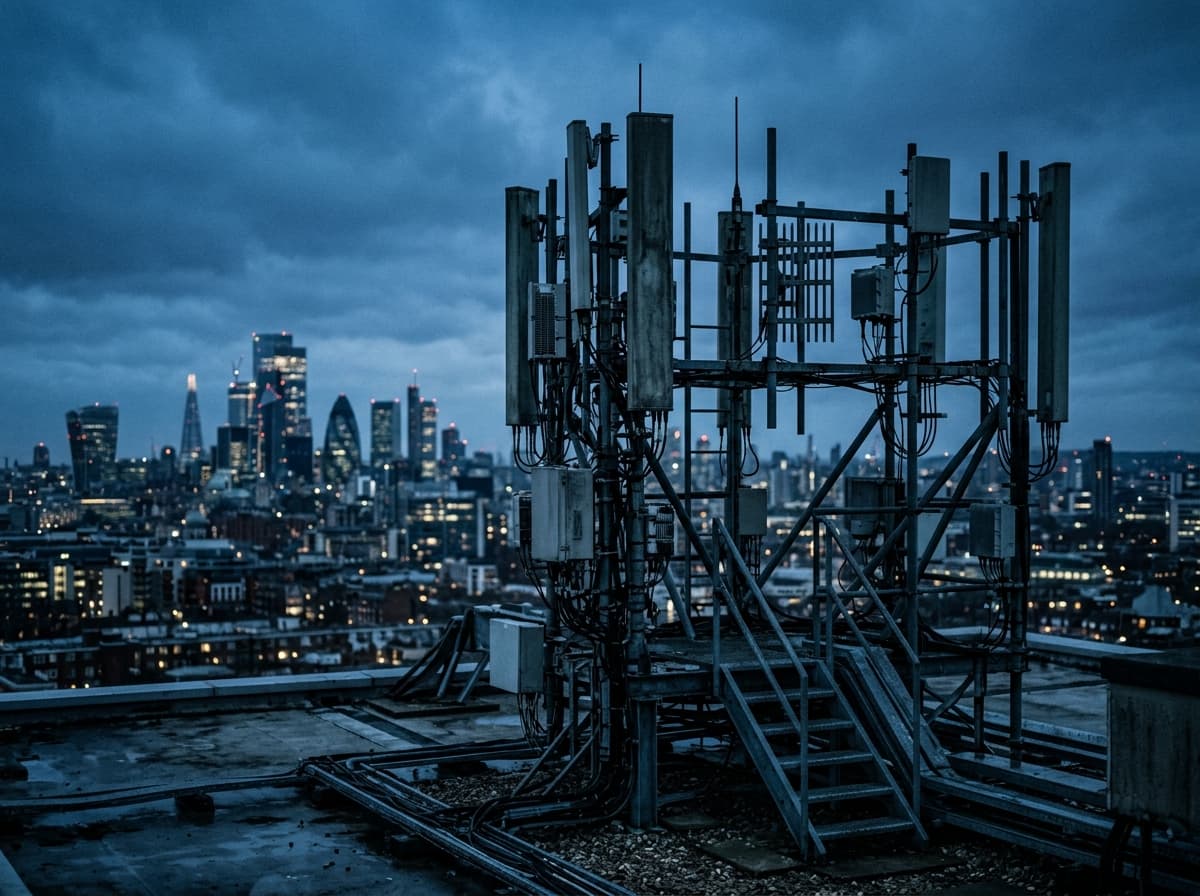
In practice, this means DIGI's coverage improves over time, and in the meantime you are not stuck in a dead zone: Proximus roaming takes over. The trade-off is that the quality perceived while roaming can differ from that of a direct Proximus subscriber, since traffic priority is not necessarily the same.
What is DIGI's real coverage?
Around 30 % of the population on its own network at the end of 2025, the rest on Proximus roaming. DIGI targets 70 % own coverage by 2028 and near-national coverage by 2030: today's figure is only a stage.
To gauge the Proximus net behind DIGI, BIPT measurements are unambiguous: the Proximus network is the best covered in Belgium, with around 65 % outdoor coverage, around 35 % indoors, and speeds up to 136.8 Mbps. A DIGI subscriber roaming therefore leans on the best infrastructure in the country — which is precisely what makes the offer viable despite a partial own network.
That leaves the indoor/outdoor gap, true for every Belgian network: 5G carried on the 3.6 GHz band travels poorly through brick and concrete. Whether you are on DIGI or elsewhere, the 5G on the pavement is not the 5G in the living room, and no marketing map tells you that for you.
DIGI's plans in July 2026
Four plans, all with unlimited calls and texts, no commitment, and prices frozen for 2026. It is the most legible grid on the market: a single axis, data volume, and a price that does not climb back at month thirteen.
| DIGI plan | 5G data | Price/month | Network |
|---|---|---|---|
| DIGI 7 GB | 7 GB | €3 | Own + Proximus roaming |
| DIGI 30 GB | 30 GB | €5 | Own + Proximus roaming |
| DIGI 40 GB | 40 GB | €7 | Own + Proximus roaming |
| DIGI 60 GB | 60 GB | €9 | Own + Proximus roaming |
Two details to read before choosing. Out-of-bundle data is billed at €0.60 per GB: on the 7 GB at €3, fairly heavy video use can swell the bill, so set the volume to your real consumption. And the plans surveyed in July 2026 do not include roaming within the European Union — abroad, you need another solution. That is something a Proximus, Orange or Telenet plan with EU roaming included does not put on you.
Why is DIGI so cheap?
Because its strategy is to buy market share, not to monetise a written-off network. DIGI, present in Romania, Spain, Italy and Portugal, applies the same recipe in Belgium: enter on the lowest price, even if it means trimming its margins while it builds a subscriber base.
The incumbents have a national network to finance and maintain over decades; they charge accordingly. DIGI is building its own now, leaning on roaming so it does not have to wait for full coverage before selling. That mismatch explains the price gap: 60 GB at €9 on DIGI against €24.99 on Proximus Mobile Smart for the same volume.
What do you lose by choosing DIGI?
Three concrete things, to weigh against the euros saved. The first is the still-partial own coverage: outside the large cities, you depend on roaming, and its behaviour can vary. The second is the absence of EU roaming on the surveyed plans: a real brake for anyone who travels. The third is a new-entrant call centre, without the shop network of an incumbent.
Conversely, you lose nothing on the essentials: the data is genuine 5G, calls and texts are unlimited, and the lack of commitment keeps the door open. For a settled, urban, heavy-data profile, the balance tips clearly towards DIGI.
DIGI or an MVNO on an established network?
If DIGI's coverage worries you, the real alternative is not a full-price incumbent but an MVNO on an already-deployed network. Mega Spark gives 30 GB at €9 on the Orange network, with no expiring promo: half the data of DIGI at the same price, but a complete national network from day one.
The reasoning holds network by network. hey! Telecom sells 50 GB at €14 on Orange; BASE, 50 GB at €20 on Telenet. None matches DIGI's price at comparable volume, but all rest on finished coverage, without the slice of uncertainty that roaming brings. The premium over DIGI buys one thing: the certainty of a network that is already there.

Should you choose DIGI?
Choose DIGI if you live and work in an area already covered by its masts or well served by Proximus roaming, and if you do not rely on your plan abroad. In that case, 60 GB at €9 with a frozen price is simply the best data-to-price ratio in the country. Elsewhere, or if you travel, an MVNO on an established network will cost you a little more for far less uncertainty.
The right reflex stays the same as for any 5G plan: the network first, the price second. To see where DIGI sits against the seven other offers that hold up on real price, our 5G plans ranking lines them up on the month-thirteen price, host network beside every row. And to weigh them criterion by criterion, the comparison table puts all eight side by side.
Sources: BIPT (mobile coverage and speeds in Belgium); DIGI Belgium (mobile plans and price list); Selectra/CallMePower price survey of 23 July 2026; Test Achats (DIGI launches a 60 GB plan at €9, 2026); Astel (DIGI in Belgium: prices and operator reactions).
Opérateurs 5G comparator
Compare all opérateurs 5g side by side.
Compare now →
Frequently asked questions
Bastien a passé sept ans dans le déploiement de sites mobiles en Wallonie et à Bruxelles avant de basculer côté rédaction, en 2021. Il connaît la différence entre une antenne 5G qui apparaît sur une carte marketing et une antenne qui porte réellement à travers un mur de brique. Depuis, il relève chaque mois les grilles tarifaires de Proximus, Orange, Telenet, BASE, DIGI, Mobile Vikings, Mega, hey! ou yoin, recoupe les débits avec les mesures de l'IBPT, et recalcule le prix sur 24 mois quand un opérateur affiche un tarif à 1 € la première année. Son constat : en Belgique, la 5G n'appartient qu'à trois réseaux, et la quasi-totalité de l'écart de prix entre deux abonnements identiques vient de la marque posée dessus, pas du signal. Il y a un truc qui le gêne dans les comparatifs qui classent Proximus premier sans jamais écrire qu'un forfait équivalent coûte trois fois moins ailleurs sur le même réseau.