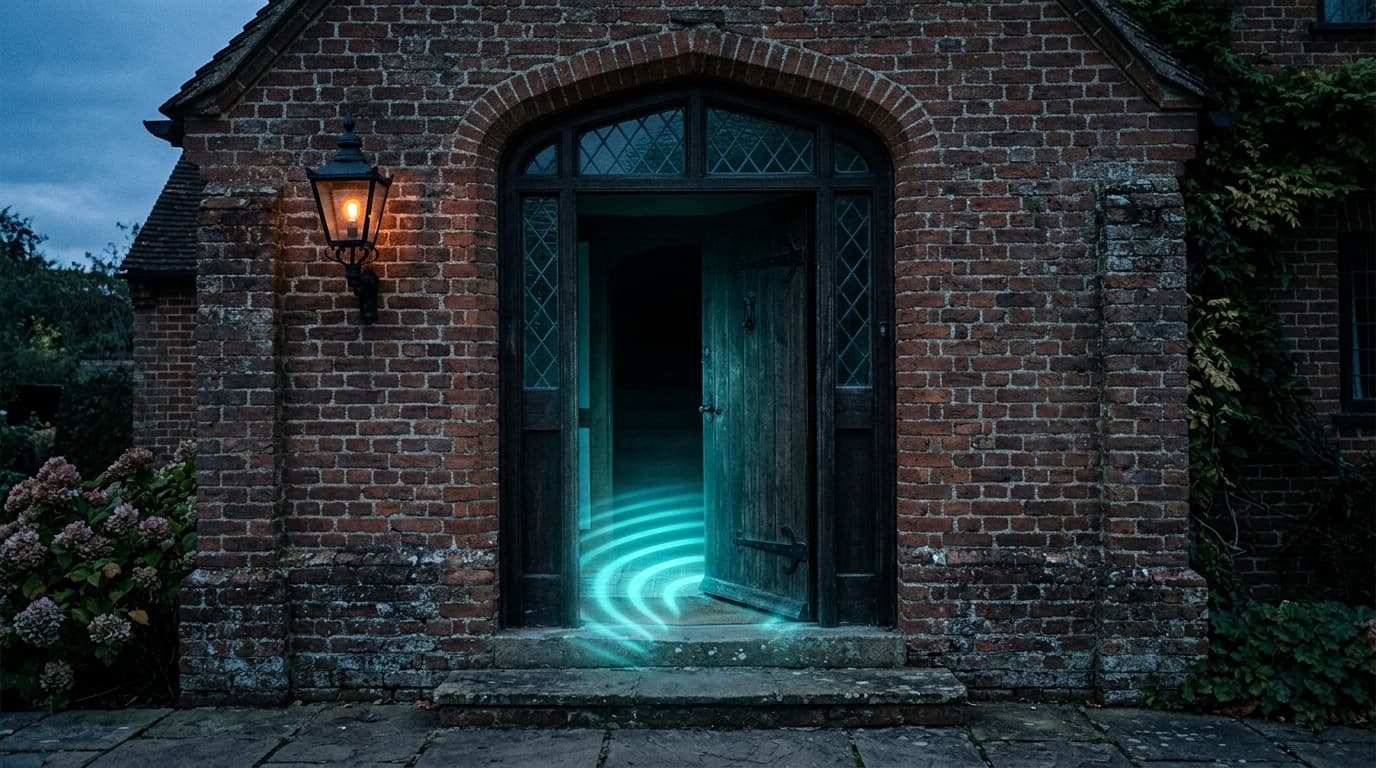
5G stops at your front door because its fast layer, the 3.6 GHz band, struggles through walls and barely passes recent insulating glass. The 5G that does get in, at 700 MHz, is hardly faster than 4G. All three Belgian networks are affected, and the fix costs nothing.
Why does 5G vanish when you walk indoors?
Because Belgian 5G is two frequency bands that behave in completely different ways.
Band n78, around 3.6 GHz, carries the speed: Proximus holds 120 MHz of spectrum there, Orange and Telenet 100 MHz each, DIGI 50 MHz. Band n28, at 700 MHz, carries the distance: it gets through brick and concrete, but each network only has blocks of 5 to 10 MHz in it. Ten times less spectrum, so speeds drop back to the level of good 4G.
Physics does the rest. At equal distance, a 3.6 GHz signal arrives about 26 times weaker than a 700 MHz signal, before it has even met the first wall. So your phone shows "5G" on the pavement, where it picks up 3.6 GHz, then sometimes keeps the same logo in the living room although it has moved to 700 MHz, or has simply dropped to 4G.
What does BIPT measure inside buildings?
BIPT, Belgium's telecom regulator (IBPT in French), publishes a mobile atlas with three signal levels: outdoor, indoor, and deep indoor, meaning the windowless room, the cellar or the building with load-bearing walls.
| 5G network | Outdoor | Indoor | Deep indoor | Drop from street to back of building |
|---|---|---|---|---|
| Telenet/BASE | 99.98% | 98.95% | 79.12% | 20.9 points |
| Orange | 99.22% | 94.16% | 72.24% | 27.0 points |
| Proximus | 99.53% | 94.31% | 71.51% | 28.0 points |
Share of territory covered, BIPT mobile atlas, January 2026 data, figures as reported by CallMePower on 16 September 2026; the drop column is our own calculation. DIGI is not in the atlas yet.
Measured against households instead of territory, the figures look kinder: about 92% deep indoors for Orange, 91% for Proximus and 90% for Telenet, according to the review BIPT published on 7 May 2026. One thing is missing from all these percentages, though. The atlas does not separate the bands: a cellar "covered by 5G" is almost always covered by 700 MHz, never by the fast layer.
Do your windows block more than your walls?
Often, yes. A study by the French building research centre CSTB for ANFR, France's national frequency agency, published in January 2021, measured the attenuation of glazing between 700 MHz and 20 GHz.
| Glazing | Average attenuation | Received power divided by |
|---|---|---|
| Single | 1.9 dB | 1.5 |
| Double, no low-emissivity coating | 3.8 dB | 2.4 |
| Double, with low-emissivity coating | 32 dB | about 1,600 |
| Triple, with low-emissivity coating | 39 dB | about 7,900 |
Source: CSTB/ANFR summary, January 2021, laboratory measurements at normal incidence; the third column is our own conversion.
The coating that keeps the cold out is a metallic film, based on silver, nickel or titanium. It sends heat back inside and radio waves back outside. A renovated house therefore gets worse reception than before the works, a paradox nobody mentions when the quote is signed.
Before blaming the network, check four things:
- reception with the window open, then closed, in the same spot: if it drops, the glazing is the cause;
- the phone's network mode, which battery saver can force to 4G;
- the room: one floor up and a façade facing the mast change everything;
- the network code shown (206 01 Proximus, 206 10 Orange, 206 20 Telenet, 206 12 DIGI), to know which masts you are really on.
Does switching provider solve the problem?
Switching brand, no. Switching network, sometimes.
Belgium has three nationwide networks plus DIGI, and some fifteen brands on top of them, many of them MVNOs, mobile virtual network operators that rent a network they do not own. hey! sells 15 GB for 5 € a month on the Orange network, while Orange Mobile Small charges 15 € for 12 GB on the same masts (surveyed on 29 September 2026, no temporary discount). Your living-room wall makes no difference between the two SIM cards. Moving to BASE, at 15 € for 15 GB on the Telenet network (surveyed on 27 September 2026), does change masts, and may be enough if the Telenet mast is closer to your home.
The method for finding out is in our guide to testing coverage at your address, and the figures per municipality in the 5G map according to BIPT.

Is a mobile signal booster legal in Belgium?
Without the operator's consent, no.
BIPT puts it bluntly: using a GSM repeater without the permission of the operator whose frequencies it relays is forbidden, and a device switched on without that consent must be deactivated immediately. The reason is technical. A badly tuned repeater jams the very mast it claims to help, and degrades the network for the whole neighbourhood. The regulator's page on these devices, updated on 21 November 2024, requires sellers to hold a licence, print an explicit notice on the packaging and declare their sales every month. The mandatory wording in the manual fits on one line: use is only allowed with the consent of all the mobile operators involved.
A "5G GSM booster" box ordered from a foreign marketplace will never get that consent. Test Achats, the Belgian consumer organisation, in an expert answer dated 26 February 2025, prices these devices at several hundred euros and points out that they create no signal: with no minimum reception outside, nothing comes in.
A Wi-Fi repeater, on the other hand, is allowed. It does not relay an operator's frequencies, it extends your router.
Wi-Fi calling, the fix that costs nothing
VoWiFi (voice over Wi-Fi) routes calls and text messages through your fixed connection as soon as the mobile signal weakens, with no app and no surcharge. It is the solution BIPT recommends to private customers.
Your brand still has to enable it. As of the 20 September 2026 survey: on the Proximus network, Proximus, Scarlet, Mobile Vikings and yoin; on the Orange network, Orange and hey!, with VOO still migrating; on the Telenet network, Telenet and BASE. DIGI enables VoLTE (calls over 4G) but does not announce VoWiFi. The detail is in our survey of VoLTE and Wi-Fi calling brand by brand.
What should you do in your situation?
| Situation | Likely cause | What to do |
|---|---|---|
| 5G in the street, 4G in the living room, decent speed | Normal fallback to a low band | Nothing. Wi-Fi takes over for data |
| Choppy or dropped calls indoors | Signal too weak behind the glazing | Turn on Wi-Fi calling in settings |
| No signal, any room, all windows closed | Metal-coated glazing or distant mast | Wi-Fi calling, then test another network with a prepaid card |
| Weak signal even outside | Area poorly covered by this network | Switch network, not brand |
| Office building or shop | Concrete structure and technical glazing | Ask the operator for an indoor solution; only the operator may install one |
| Tempted by an online booster | Pushy sales pitch | Hold off without the operator's written consent |
Should you pay for 5G if it does not reach your home?
On three networks the question costs nothing: 5G is included at hey! for 5 € (Orange network), at BASE for 15 € (Telenet network) and at DIGI for 9 € with 60 GB (DIGI network, surveyed on 27 September 2026). On the Proximus network it depends on the label: Scarlet, at 10 € for 10 GB, stays on 4G, and still enables Wi-Fi calling.
For someone who mostly calls from home, the feature that matters is not 5G. It is VoWiFi.
We measure nothing in the field and subscribe to none of these plans: this page cross-checks the BIPT atlas, a public study and the brands' tariff sheets. Plans sorted on the month-thirteen price, host network shown, are in our 5G plan ranking.
Sources: BIPT, mobile networks review of 7 May 2026 (mobile atlas, January 2026 data); BIPT, pages "Mobile network indoor coverage" and "Mobile signal repeaters" (updated 21 November 2024); CSTB for ANFR, summary of the glazing attenuation study, January 2021; CallMePower, ranking of Belgian mobile networks, 16 September 2026; Test Achats, expert answer "Booster sa connexion mobile", 26 February 2025; tariff sheets of hey!, Orange, Scarlet, BASE and DIGI surveyed on 27 and 29 September 2026; the site's own VoLTE and VoWiFi survey of 20 September 2026. No link on this page is monetised.
Couverture & réseau comparator
Compare all couverture & réseau side by side.
Compare now →
Frequently asked questions
Bastien a passé sept ans dans le déploiement de sites mobiles en Wallonie et à Bruxelles avant de basculer côté rédaction, en 2021. Il connaît la différence entre une antenne 5G qui apparaît sur une carte marketing et une antenne qui porte réellement à travers un mur de brique. Depuis, il relève chaque mois les grilles tarifaires de Proximus, Orange, Telenet, BASE, DIGI, Mobile Vikings, Mega, hey! ou yoin, recoupe les débits avec les mesures de l'IBPT, et recalcule le prix sur 24 mois quand un opérateur affiche un tarif à 1 € la première année. Son constat : en Belgique, la 5G n'appartient qu'à trois réseaux, et la quasi-totalité de l'écart de prix entre deux abonnements identiques vient de la marque posée dessus, pas du signal. Il y a un truc qui le gêne dans les comparatifs qui classent Proximus premier sans jamais écrire qu'un forfait équivalent coûte trois fois moins ailleurs sur le même réseau.